AI Content Research Pipeline: YouTube Trends to Ready-to-Film Scripts

Turned a YouTube niche search into a ranked shortlist with a ready-to-film hook, outline, and script for each video.
Manually searching YouTube, watching competitor videos, and transcribing the useful parts before writing could even start
~4 hrs per script
The Challenge
Coming up with new video ideas meant manually searching YouTube for what was performing well, watching competitor videos, and transcribing the parts worth building on before anyone could start writing. That research alone could eat half a day before a single word of script got written.
The Solution
I built a three-stage n8n pipeline that turns a YouTube search into a ready-to-film script brief. A Crawler workflow runs on a schedule, searches a set of query terms, pulls video details for each result, filters out anything outside the target length, and ranks what's left to keep the top performers. A Transcript workflow takes that shortlist and pulls the full transcript for each video through Apify, with a wait-and-retry step since transcript extraction doesn't always land on the first try. A Summary Analysis workflow runs each transcript through a chain of OpenAI prompts, one for the hook, one for the outline, one for the examples used, and one for the full script, then writes it all into a Google Doc with a Slack ping when it's ready to review.
How It Works
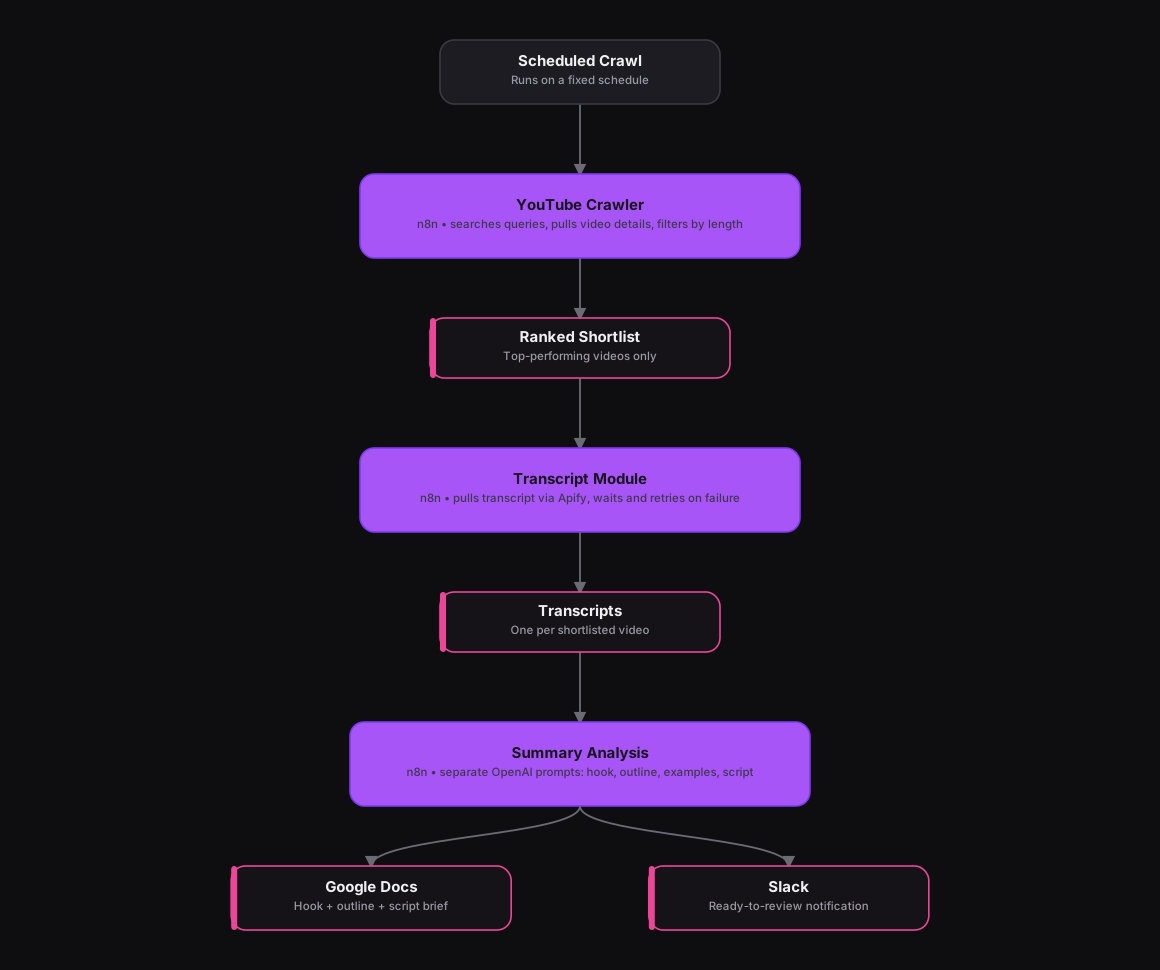
The Results
Finding out what's working in a niche and turning it into a script brief no longer eats a research afternoon. The pipeline runs on its own schedule and hands back a ranked shortlist of proven videos with a ready-to-review hook, outline, and script for each one. Since it's split into three independent workflows (crawl, transcript, analyze), any stage can be re-run or tweaked without touching the rest.
Tools & Technologies Used
How To Create This
- Build a scheduled Crawler workflow that searches YouTube for a set of query terms and pulls back video details via the YouTube API
- Add a ranking step that scores and filters results, discarding anything outside your target video length, and keep only the top-performing shortlist
- Hand the shortlist to a Transcript workflow (triggered via Execute Workflow) that pulls each video's transcript through Apify, with a wait-and-retry step since extraction can be slow or fail on the first pass
- Feed each transcript into a Summary Analysis workflow that runs it through separate OpenAI prompts for the hook, outline, examples, and full script rather than one giant prompt
- Write the generated brief into a Google Doc per video and post a Slack notification when it's ready
- Split the pipeline into three independently-triggerable workflows so any single stage can be re-run without repeating the others
Related Case Studies
AI-Powered Ticket Routing From a Single Slack Mention
An AI agent that reads a plain Slack @mention and turns it into a fully assigned ClickUp ticket, across IT, EA, and other departments, with no form to fill out.
Closed-Loop Sales Automation System Across Calendly, Close CRM, ClickUp & Slack
A suite of connected n8n workflows that carry a booked call all the way through pre-call prep, CRM sync, audit QA, and daily reporting, so no rep has to touch five separate tools by hand.
